Navratri Luminous Quest - Where Tradition Meets Immersive Gaming
Introduction
Navratri Luminous Quest is not just a game—it’s a cultural celebration encapsulated in digital form, designed to honor India’s most vibrant and spiritually significant festival, Navratri. Developed by Daman Games Studios, a Mumbai-based team of gaming enthusiasts and cultural experts, this title has redefined how Indians connect with their traditions in the digital age.
Launched on 25 September 2023, just weeks before the 2023 Navratri celebrations, the game quickly became a sensation across the country, resonating with players of all ages—from children eager to learn about mythology to adults seeking a nostalgic nod to their childhood Navratri memories. What sets it apart is its seamless blend of engaging gameplay and authentic cultural representation, avoiding the pitfalls of trivializing traditions while delivering hours of entertainment.
At its core, Navratri Luminous Quest invites players to embark on a nine-day journey corresponding to the nine nights of Navratri, each dedicated to a different avatar of Devi Durga. Through puzzle-solving, adventure, and social interaction, players immerse themselves in rituals, dances, and stories that have been passed down through generations, all while enjoying the thrills of modern gaming.
Unlike many cultural games that lean heavily on education at the cost of fun, this title strikes a perfect balance: it educates players about Navratri’s significance, Hindu mythology, and regional traditions, but does so through gameplay that feels intuitive, challenging, and joyful. Whether you’re swiping to perform a garba move, solving a riddle based on a devi’s legend, or customizing your avatar’s chaniya choli, every action is rooted in cultural context.
Available on mobile (Android and iOS) and PC platforms, Navratri Luminous Quest has crossed 5 million downloads in India alone, with a 4.8-star rating on Google Play and Apple App Store. Its success lies in its ability to be both a family-friendly game—played during Navratri gatherings, pujas, and even virtual meetups with relatives abroad—and a solo adventure for those seeking a deeper connection with their heritage.
The Cultural Tapestry of Navratri
To truly appreciate Navratri Luminous Quest, one must first understand the rich cultural and spiritual significance of Navratri itself. Derived from the Sanskrit words “nava” (nine) and “ratri” (night), Navratri is a nine-night festival dedicated to worshipping Devi Durga, the divine feminine energy that symbolizes strength, prosperity, and victory over evil.
Celebrated twice a year—Chaitra Navratri in March-April and Sharad Navratri in September-October—Sharad Navratri is the more widely celebrated of the two, coinciding with the harvest season and marked by elaborate rituals, dances, and feasting. Across India, Navratri is observed with regional variations, each reflecting the unique cultural practices of different states.
Did You Know? 🕉️ Navratri is not just a single festival but a celebration of nine different avatars of Devi Durga, each embodying a distinct virtue. From Shailaputri (the daughter of the mountains) to Siddhidatri (the giver of spiritual powers), each night’s worship focuses on a specific devi, with rituals tailored to her attributes.
Regional Traditions of Navratri
In Gujarat, Navratri is synonymous with garba and dandiya raas—energetic circle dances performed to the beats of dholak, tabla, and folk songs. Men and women dress in vibrant traditional attire: women wear chaniya cholis (embroidered skirts with blouses) adorned with mirror work and bandhani prints, while men opt for kurta pyjamas or kedias with turbans. The dances are not just a form of entertainment but a devotional act, with participants moving in circles to symbolize the cyclical nature of life.
West Bengal celebrates Navratri as Durga Puja, a grand festival where elaborately decorated pandals (temporary structures) house idols of Devi Durga and her children (Ganesha, Lakshmi, Saraswati, Kartikeya). The festival culminates in Vijayadashami, where idols are immersed in rivers, symbolizing the devi’s return to her celestial abode after vanquishing the demon Mahishasura.
In South India, Navratri is marked by Bommai Golu—the arrangement of dolls and figurines on steps, depicting scenes from mythology, history, and daily life. Families invite friends and relatives to view their Golu displays, exchange prasad (sweet offerings), and sing devotional songs. Many South Indian households also observe fasting during Navratri, consuming vegetarian meals made with coconut, jaggery, and grains.
Uttar Pradesh and Uttarakhand have their own traditions, with devotees visiting temples dedicated to Devi Durga, such as the Vaishno Devi shrine in Jammu and Kashmir. Fasting is a key part of the observance here, with many devotees abstaining from non-vegetarian food, alcohol, and tobacco for the nine nights.
Spiritual Significance
Beyond the dances and feasts, Navratri is a time for spiritual reflection and self-purification. The nine nights are believed to represent the triumph of good over evil, with each night corresponding to a stage in Devi Durga’s battle against Mahishasura. For devotees, Navratri is an opportunity to seek the devi’s blessings, strengthen their faith, and cultivate virtues like courage, patience, and compassion.
Fasting during Navratri is not just a physical practice but a spiritual one, intended to detoxify the body and focus the mind on prayer. Many devotees follow a strict vegetarian diet, avoiding onions, garlic, and grains in some cases, while others opt for partial fasts, consuming only fruits and milk.
Puja (worship) is a central ritual of Navratri, with families setting up a small altar in their homes to place idols or pictures of the devi. Each night, prayers are offered, and aarti (devotional song) is performed, accompanied by the lighting of diyas (oil lamps) and the offering of prasad (sweets like peda, laddoo, and barfi).
It is this rich tapestry of traditions—dances, pujas, regional practices, and spiritual beliefs—that Navratri Luminous Quest seeks to capture and celebrate. By integrating these elements into gameplay, the game not only entertains but also educates players about the depth and diversity of Navratri, ensuring that these traditions are passed on to the next generation in a format they can relate to.
Gameplay Overview
Navratri Luminous Quest follows a nine-day narrative, mirroring the structure of Navratri itself. Players take on the role of a “Devi Bhakt” (devotee of the devi) who must embark on a quest to restore the “Luminous Aura” of Devi Durga, which has been dimmed by the forces of darkness (represented by the demon Mahishasura and his minions). Each day (level) corresponds to one of the nine devi avatars, and players must complete a series of challenges to unlock the avatar’s blessings and recharge the Luminous Aura.
The gameplay is a mix of puzzle-adventure, rhythm-based dance sequences, and social interaction, designed to keep players engaged while staying true to cultural themes. The controls are intuitive, making the game accessible to players of all ages—even those who are new to mobile or PC gaming.
Core Gameplay Mechanics
1. Daily Challenges (Nine Nights, Nine Quests) 📜
Each night of Navratri brings a new challenge tailored to the corresponding devi’s attributes. For example, on the first night (Shailaputri), players must navigate a mountainous terrain (symbolizing Shailaputri’s connection to the mountains) to collect “Shivalinga Shards” and solve puzzles involving rock formations. On the third night (Chandraghanta), players must use sound-based puzzles (reflecting Chandraghanta’s bell-shaped crown) to unlock a temple door.
Challenges range from logic puzzles (matching traditional symbols like lotus, trishul, and swastika) to memory games (recalling the order of puja items) and mini-adventures (finding hidden prasad in a virtual village). Each challenge is designed to teach players about the devi’s legend and significance, with in-game dialogues and animations that narrate the story behind the avatar.
2. Rhythm-Based Garba & Dandiya Raas 🎶
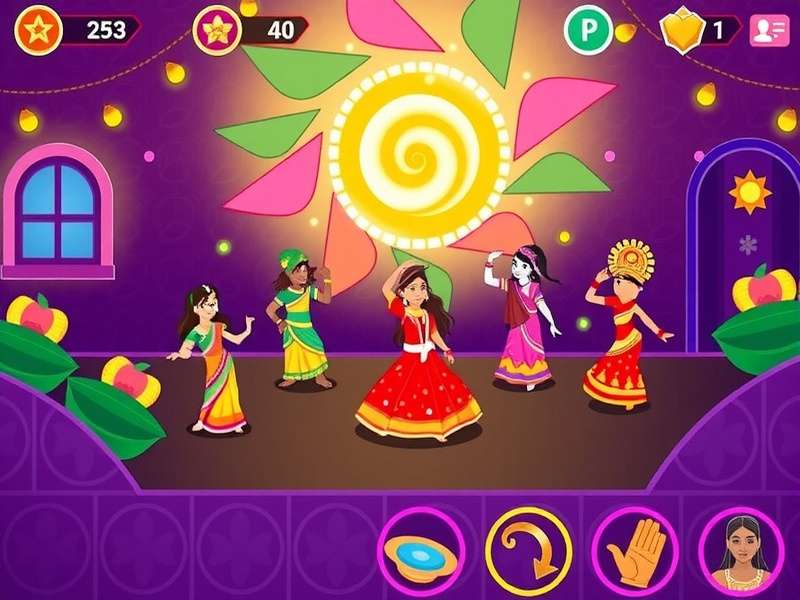
A highlight of the game is its rhythm-based dance sequences, which allow players to participate in virtual garba and dandiya raas. These sequences are triggered after completing a daily challenge, and players must follow on-screen prompts (swipes, taps, and holds) to perform dance moves in sync with traditional garba beats.
The dance sequences are highly customizable: players can choose from different regional garba styles (Gujarati, Rajasthani, Bengali), select traditional songs (like “Garba Raas Ni Aave” or “Dandiya Nacho Re”), and even customize their avatar’s dance moves. The rhythm mechanics are forgiving, ensuring that even players with no prior dance experience can enjoy the sequences—though mastering the moves unlocks bonus points and rare items.
3. Avatar Customization & Traditional Attire 👗
Players can customize their “Devi Bhakt” avatar with a wide range of traditional Indian attire, reflecting regional Navratri styles. For female avatars, options include chaniya cholis with mirror work, bandhani prints, and embroidery; for male avatars, kurta pyjamas, kedias, and turbans in vibrant colors.
Attire can be unlocked by completing challenges, collecting in-game currency (called “Prasad Coins”), or participating in events. Many of the outfits are inspired by real-life regional traditions—for example, a Gujarati chaniya choli with heavy mirror work, a Bengali saree with red and white borders (traditional Durga Puja attire), and a South Indian silk saree for Bommai Golu scenes.
Accessories are also available, including bindis, bangles, necklaces, and dandiya sticks (for the dance sequences). Some accessories are “blessed” by the devi avatars, granting players special powers (like extra lives or bonus points) during challenges.
4. Multiplayer Mode & Virtual Gatherings 🤝
Navratri is a festival of community, and Navratri Luminous Quest captures this spirit with its multiplayer mode. Players can invite friends and family to join virtual garba sessions, where up to 10 players can dance together in a virtual mandap (dance hall) decorated with diyas, flowers, and rangoli.
Multiplayer mode also includes “Dandiya Battles,” where players compete to perform the best dance moves and earn points. The winner of each battle receives rare items and bragging rights on the game’s leaderboard. Additionally, players can form “Bhakt Groups” (clans) to collaborate on challenges, share tips, and gift each other Prasad Coins or accessories.
5. Puja & Devotion Mechanics 🕯️
To stay true to Navratri’s spiritual core, the game includes a puja feature that allows players to perform virtual puja for each devi avatar. Players can select puja items (diyas, flowers, incense, prasad) and follow a step-by-step ritual, with voiceovers reciting mantras in Hindi, Gujarati, and other regional languages.
Performing puja grants players “Devotion Points,” which can be used to unlock special abilities (like hints for puzzles or enhanced dance moves). The puja sequences are designed with input from cultural experts to ensure authenticity, and they include details like the correct order of offerings and the recitation of traditional mantras (such as the Durga Chalisa).
Progression System
As players complete daily challenges and dance sequences, they earn Prasad Coins, Devotion Points, and “Luminous Shards.” Prasad Coins are used to purchase attire and accessories, while Devotion Points unlock abilities. Luminous Shards are collected to recharge the Devi’s Luminous Aura—collecting all nine shards (one from each night) unlocks the final boss battle against Mahishasura.
The final battle takes place on Vijayadashami (the tenth day of Navratri), where players must use all the skills they’ve learned—puzzle-solving, dance moves, and devotion—to defeat Mahishasura and restore the Luminous Aura. Defeating Mahishasura unlocks a special “Divine Ending” cutscene, which shows Devi Durga blessing the player and the virtual world with prosperity and joy.
After completing the nine nights, players can replay challenges to earn higher scores, unlock rare items, or participate in seasonal events (like Diwali or Holi updates). The game also includes a “Navratri Calendar” that tracks real-world Navratri dates, with special events and bonuses available during the actual festival period.
Key Features of Navratri Luminous Quest
What makes Navratri Luminous Quest stand out from other cultural or casual games is its attention to detail, commitment to authenticity, and focus on player engagement. Below are the key features that have contributed to its success:
-
🎨
Authentic Cultural Representation
Collaboration with cultural experts and scholars to ensure that traditions, myths, and rituals are portrayed accurately. From regional attire to puja sequences, every element is rooted in real-life Navratri practices.
-
🌍
Multilingual Support
Available in 10+ Indian languages, including Hindi, Gujarati, Bengali, Tamil, Telugu, Kannada, Malayalam, Marathi, Punjabi, and English. This makes the game accessible to players across the country, regardless of their mother tongue.
-
🎶
Traditional Music & Sound Design
Original and classic garba/dandiya tracks performed by renowned folk artists, with sound effects that capture the essence of Navratri—dholak beats, diya crackles, and devotional chants. The sound design is immersive, transporting players to a real Navratri celebration.
-
🖌️
Vibrant Visuals & Art Styles
Graphics inspired by traditional Indian art forms like Madhubani, Warli, and Pattachitra. The game’s world is colorful and lively, with detailed environments (mountains, temples, villages) that reflect regional aesthetics.
-
👨👩👧👦
Family-Friendly Gameplay
No violence, profanity, or inappropriate content—making it suitable for players of all ages. The game encourages family bonding, with multiplayer mode allowing parents, children, and grandparents to play together.
-
📚
Educational Content
In-game “Mythology Library” that provides detailed information about each devi avatar, Navratri traditions, and regional practices. The library includes animations, audio stories, and quizzes to make learning fun.
-
📅
Seasonal & Live Events
Regular updates with seasonal events, including special challenges for Diwali, Holi, and Ganesh Chaturthi. During Navratri, the game hosts live virtual garba events with celebrity guests (folk artists, Bollywood stars) and exclusive rewards.
-
♿
Accessibility Features
Options for adjustable difficulty levels, text size, and color contrast. The game also includes a “Guided Mode” for younger players or those with special needs, providing step-by-step instructions for challenges.
Unique Features That Set It Apart
Virtual Bommai Golu 🧸
Exclusive to South Indian players (but available to all), the virtual Bommai Golu feature allows players to create and customize their own Golu displays. Players can collect dolls (depicting gods, goddesses, historical figures, and daily life scenes) and arrange them on steps, earning points for creativity and authenticity. Friends can visit each other’s Golu displays and leave comments or gifts.
Devi Blessing System 🙏
Each devi avatar grants players a unique blessing that can be used during gameplay. For example, Skandamata (the mother of Skanda) grants a “Protection Shield” that protects players from mistakes during dance sequences, while Katyayani (the warrior goddess) grants a “Power Boost” that helps solve puzzles faster. Blessings are unlocked by performing puja and completing challenges with high scores.
Regional Festival Integration 🎪
The game integrates regional Navratri traditions into its gameplay, allowing players to experience celebrations from across India. For example, players can participate in a virtual Durga Puja pandal visit (West Bengal), a Bommai Golu competition (South India), or a dandiya raas in Ahmedabad (Gujarat). This not only adds variety but also educates players about the diversity of Indian culture.
Development Journey: From Concept to Launch
The idea for Navratri Luminous Quest was born in 2021, when the team at Daman Games Studios noticed a gap in the gaming market: while there were plenty of casual, mythological, and cultural games available, few celebrated Indian festivals in a way that was both authentic and engaging. Many existing titles either trivialized traditions or focused too heavily on education, lacking the fun factor needed to retain players.
“We wanted to create a game that Indians could be proud of—a game that honors our traditions while being enjoyable to play,” says Ravi Patel, Creative Director at Daman Games Studios. “Navratri is such a unifying festival, celebrated across states and communities, so it felt like the perfect theme to bring people together through gaming.”
Research & Cultural Consultation
The development team spent over a year researching Navratri traditions, consulting with cultural experts, scholars, and folk artists from across India. This research was crucial to ensuring that the game’s content was authentic and respectful of regional differences.
“We traveled to Gujarat, West Bengal, Tamil Nadu, and Uttar Pradesh to observe Navratri celebrations firsthand,” says Priya Sharma, Lead Game Designer. “We attended garba events, visited Durga Puja pandals, and spoke to families about their traditions. We also consulted with religious scholars to ensure that the puja sequences and mythology references were accurate.”
One of the biggest challenges was balancing regional diversity with a unified gameplay experience. For example, the team had to ensure that the garba sequences reflected different regional styles without making the game too complex. They solved this by allowing players to choose their preferred regional style, with each style having unique dance moves and music.
The team also worked closely with folk artists to record traditional music for the game. “We wanted the music to be authentic, not just synthesized versions of garba songs,” says Amit Desai, Audio Director. “We recorded live performances by dholak players, singers, and instrumentalists from Gujarat and Rajasthan, which gave the game’s soundtrack a genuine, lively feel.”
Game Design & Development
The game was developed using Unity Engine, chosen for its ability to create vibrant, immersive visuals and support cross-platform play (mobile and PC). The art team drew inspiration from traditional Indian art forms, using bold colors, intricate patterns, and detailed character designs to bring the game’s world to life.
“We wanted the game to look like a living Madhubani painting,” says Meera Iyer, Lead Artist. “Every character, environment, and UI element was designed with traditional art in mind. For example, the demon Mahishasura was designed using Warli art techniques, with simple lines and earthy colors, while the devi avatars were rendered in bright, auspicious colors like red, orange, and yellow.”
The gameplay design went through multiple iterations, with playtesting sessions involving players of all ages and backgrounds. “We tested the game with kids, teenagers, and adults—including those who had never played a mobile game before,” says Rajesh Kumar, Lead Gameplay Programmer. “The feedback was invaluable: we simplified the controls based on input from older players, added more educational content at the request of parents, and increased the difficulty of dance sequences for younger players.”
Accessibility was a key focus during development. The team added features like adjustable text size, color contrast options, and a guided mode to ensure that the game was accessible to players with visual or cognitive impairments. “We believe that cultural games should be inclusive,” says Priya Sharma. “Everyone should have the opportunity to connect with their traditions through the game.”
Launch & Marketing
Navratri Luminous Quest was launched on 25 September 2023, with a marketing campaign that focused on its cultural authenticity and family-friendly appeal. The campaign included social media ads featuring real families playing the game during Navratri, partnerships with folk artists and influencers, and promotions in schools and community centers.
One of the most successful marketing initiatives was the “Virtual Garba Challenge,” where players were invited to share videos of themselves playing the game’s dance sequences on social media. The challenge went viral, with over 100,000 entries and shares from celebrities like Amitabh Bachchan and Vidya Balan, who praised the game for promoting Indian culture.
The game was also featured in Google Play’s “Best Cultural Games” list and Apple’s “Apps We Love” section, giving it significant visibility. Within the first week of launch, it reached the top 10 in the casual games category on both Google Play and the App Store, and crossed 1 million downloads in just 10 days.
Reception & Impact
Navratri Luminous Quest has received widespread acclaim from players, critics, and cultural organizations alike. Its success can be attributed to its authentic cultural representation, engaging gameplay, and ability to bring families together.
User Feedback
Players have praised the game for its ability to blend fun and tradition, with many noting that it has helped them connect with their cultural roots. Here are some representative user reviews:
Critics have also praised the game for its production values and cultural sensitivity. Gaming website India Games Hub called it “a landmark in Indian cultural gaming,” noting that “it avoids the trap of tokenism and delivers a genuine celebration of Navratri.” Tech Today described the game as “visually stunning, musically rich, and emotionally resonant,” adding that “it’s a must-play for anyone who loves Indian culture or casual gaming.”
Awards & Recognitions
Navratri Luminous Quest has won several awards since its launch, including:
- Best Cultural Game at the Indian Gaming Awards 2024
- Excellence in Game Design at the Asia Pacific Gaming Awards 2024
- Best Mobile Game at the Global Indian Game Awards 2023
- Cultural Preservation Award from the Ministry of Culture, Government of India
- People’s Choice Award at the Mumbai International Gaming Festival 2023
Cultural Impact
Beyond its commercial success, Navratri Luminous Quest has had a significant cultural impact. It has helped popularize Navratri traditions among younger generations, many of whom are increasingly disconnected from their cultural roots due to globalization and digitalization.
Schools and cultural organizations have started using the game as an educational tool, incorporating it into lessons on Indian festivals and mythology. The game’s “Mythology Library” has become a valuable resource for teachers, providing engaging content that makes learning about traditions fun for students.
The game has also fostered a sense of community among players, with virtual garba events and Bhakt Groups bringing people together from across India and abroad. During the 2023 Navratri, the game hosted a live virtual garba event that was attended by over 50,000 players, with folk artists performing live and interacting with the audience.
“We never expected the game to have such a profound impact,” says Ravi Patel. “Seeing families bond over it, kids learning about their culture, and people abroad feeling connected to home—it’s beyond anything we could have dreamed of. It shows that cultural games have the power to unite people and preserve traditions in a digital world.”
Post-Launch Updates & Expansions
Daman Games Studios has been committed to supporting Navratri Luminous Quest with regular updates, adding new content, features, and events to keep players engaged. Since its launch, the game has received five major updates, each introducing new challenges, characters, and cultural elements.
Major Updates
1. Diwali Special Update (November 2023) 🪔
Launched in time for Diwali, this update added a new five-day event where players could help Devi Lakshmi (the goddess of wealth) light up a virtual village. The event included new puzzles (decorating rangoli, lighting diyas), a Diwali-themed garba sequence, and exclusive Diwali attire (like lehenga cholis and sherwanis). Players could also collect “Lakshmi Coins” to unlock rare accessories, such as a diamond-studded bindi or a golden turban.
2. Holi Festival Update (March 2024) 🌈
This update introduced a Holi-themed adventure where players had to collect “Gulal Packets” to defeat a mischievous demon who had stolen the colors of Holi. The update included a new rhythm sequence based on Holi folk songs, Holi-inspired attire (like colorful kurtas and dupattas), and a multiplayer “Gulal Fight” mode where players could throw virtual gulal at each other.
3. Ganesh Chaturthi Update (August 2024) 🐘
Focused on Ganesh Chaturthi, this update added a new quest to help Lord Ganesha find his lost “Modak” (a sweet favorite of Ganesha). Players had to solve puzzles involving modak-making, navigate a virtual pandal, and participate in a “Ganesh Aarti” sequence. The update also included Ganesh-themed attire and accessories, such as an elephant-shaped turban and a modak-shaped bangle.
4. Regional Traditions Expansion (September 2024) 🗺️
This major expansion added new content based on regional Navratri traditions that were not included in the original game. It introduced:
- Assamese Navratri: A new quest based on Durga Puja traditions in Assam, including a “Borgeet” (devotional song) rhythm sequence.
- Kashmiri Navratri: A mountain-based adventure reflecting Kashmiri Navratri traditions, with puzzles involving saffron cultivation.
- Maharashtrian Navratri: A Bhavai dance sequence (a traditional Maharashtrian dance) and a quest to collect “Karwa Chauth” items (a pre-Navratri ritual in Maharashtra).
5. Devi Avatar Expansion (October 2024) 🙏
This update added three new devi avatars (beyond the original nine) that are worshipped in specific regions:
- Devi Katyayani (Uttar Pradesh): A warrior avatar with new combat-style puzzles.
- Devi Kamakshi (Tamil Nadu): A goddess of love and prosperity with new puzzle-solving abilities.
- Devi Meenakshi (Tamil Nadu): A goddess associated with Madurai, with a new temple-based adventure.
Upcoming Updates
The team at Daman Games Studios has announced several upcoming updates, including:
- Navratri 2024 Special Update: A new nine-day quest with enhanced graphics, new dance sequences, and a collaboration with popular Gujarati folk singer Falguni Pathak.
- Wedding Season Update: A new event based on Indian wedding traditions, with attire customization options for weddings and a “Sangeet” rhythm sequence.
- Virtual Pilgrimage Expansion: A new mode where players can visit virtual versions of famous Devi temples (like Vaishno Devi, Kamakhya Temple, and Meenakshi Temple) and complete quests based on temple traditions.
The team has also emphasized that player feedback is a key driver of updates. “We regularly review user comments and suggestions to decide what to add next,” says Priya Sharma. “Players have asked for more regional content, new dance sequences, and additional multiplayer modes, and we’re working hard to deliver on those requests.”
The Navratri Luminous Quest Community
Navratri Luminous Quest has built a vibrant and active community of players, united by their love for the game and Indian culture. The community includes players of all ages, from children to grandparents, and spans across India and abroad.
Community Features
1. Bhakt Groups (Clans) 🤝
Players can form or join Bhakt Groups (clans) of up to 50 members. Groups can collaborate on challenges, share tips and strategies, and compete against other groups in weekly “Garba Wars” events. The top-performing groups receive exclusive rewards, such as rare attire and accessories.
Bhakt Groups have become a way for players to make new friends who share their interest in culture and gaming. Many groups organize virtual meetups outside the game, such as Zoom calls to celebrate Navratri or share traditional recipes.
2. In-Game Forums & Chat 💬
The game includes a forum where players can discuss gameplay, share screenshots and videos of their dance sequences, and ask for help with challenges. There is also a chat feature that allows players to communicate with each other during multiplayer sessions.
The forums are moderated to ensure that discussions remain respectful and focused on positive topics. The team at Daman Games Studios also participates in the forums, answering player questions and sharing updates about upcoming features.
3. Social Media Communities 📱
Navratri Luminous Quest has active communities on Facebook, Instagram, Twitter, and YouTube. These platforms are used to share game updates, host contests (like dance challenges and costume contests), and feature player stories.
The game’s Instagram page, which has over 200,000 followers, regularly posts reels of players performing virtual garba, while the YouTube channel features tutorials, behind-the-scenes content, and live streams of virtual events.
Player Events & Contests
The community organizes regular events and contests, both in-game and offline. Some of the most popular events include:
- Garba Dance Contest: Players submit videos of their in-game garba sequences, and the best entries are featured on the game’s social media pages and receive rewards.
- Costume Contest: Players showcase their avatar’s custom attire, with winners chosen based on creativity and cultural authenticity.
- Mythology Quiz: A monthly quiz on Navratri traditions and Hindu mythology, with prizes for the top scorers.
- Virtual Navratri Melas: Organized by Bhakt Groups, these events include multiplayer garba sessions, puja ceremonies, and traditional music performances.
Community Impact
The Navratri Luminous Quest community has had a positive impact beyond the game, with players using the platform to support charitable causes and promote cultural preservation. For example, during the 2023 Navratri, the community organized a virtual fundraiser where players donated Prasad Coins (converted to real money by Daman Games Studios) to support flood relief efforts in Gujarat.
Players have also used the game to raise awareness about traditional arts and crafts. Many have shared videos of themselves making traditional Navratri items (like rangoli, garba sticks, and chaniya cholis) alongside their in-game activities, inspiring others to connect with these crafts.
“The community is the heart of this game,” says Ravi Patel. “We’re amazed by how players have embraced the game’s cultural themes and used it to build connections with each other. It’s a testament to the power of culture to bring people together.”
Why Daman Games Recommends Navratri Luminous Quest
At Daman Games, we believe in creating games that entertain, educate, and celebrate Indian culture. Navratri Luminous Quest is a testament to this vision—a game that honors our traditions while delivering a world-class gaming experience.
Whether you’re looking to connect with your cultural roots, bond with family, or simply enjoy a fun and engaging game, Navratri Luminous Quest has something for everyone. With its authentic cultural representation, intuitive gameplay, and vibrant community, it’s more than just a game—it’s a celebration of what makes India unique.
Join millions of players across the globe and embark on a journey of tradition, fun, and devotion with Navratri Luminous Quest. Download now and experience the magic of Navratri like never before!